
Slim Tea Explained: Benefits, Risks, Ingredients, and What to Expect Realistically
Author: Ramzi Issa
Credentials: Health & Wellness Content Strategist, Nutrition & Lifestyle Research Writer
Experience: 5+ years writing evidence-aligned health education content for general audiences
Reviewed by: Dr. Ayesha Malik, MBBS
Qualification: Medical Doctor
Area of Expertise: Preventive Health & Lifestyle Medicine
A calm place to start—before the promises and packaging
If you’ve searched for slim tea or slimming tea, there’s a good chance you’ve already tried something else that didn’t work the way you hoped. Many people arrive here feeling confused, skeptical, or quietly frustrated—especially after seeing dramatic “before and after” claims online.
That reaction makes sense.
In real-world settings, weight-related tools are often marketed as faster and simpler than they truly are. This guide is designed to slow things down, explain what slim tea actually is, and help you decide—without pressure—whether it has a place in your routine. There are no guarantees here, only clear explanations, realistic expectations, and a safety-first context.
What is slim tea? (Definition & basics)
Slim tea, sometimes called slimming tea, herbal slim tea, or weight loss tea, is a broad category of herbal or tea-based blends marketed to support digestion, reduce bloating, manage appetite, or slightly increase daily energy expenditure.
In practice, slim teas are not a single product type. They vary widely based on ingredients, caffeine content, and intended effects. Some focus on green tea or matcha, others rely on digestive herbs, and some include laxative plants like senna.
A common misunderstanding is that slim tea directly causes fat loss. Public health guidance does not recognize any tea as a stand-alone fat-loss solution. Most effects—when they occur—are indirect and modest.
How does slim tea work? (Mechanism explained simply)
Slim tea products usually work through one or more of four pathways:
1. Mild metabolism support
Teas containing green tea or matcha provide caffeine and catechins such as EGCG, which may slightly increase energy expenditure. According to summaries from organizations like the National Institutes of Health (NIH), this effect is typically small and varies between individuals.
2. Digestive comfort and bloating reduction
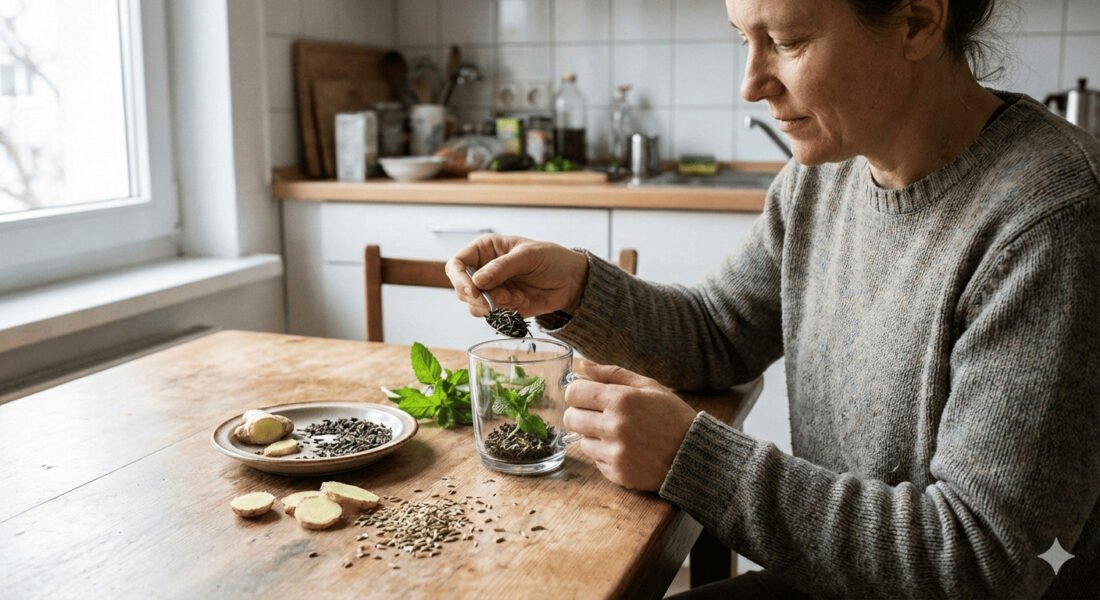
Herbs like peppermint, fennel, and ginger are traditionally used to support digestion. In practice, people commonly report less bloating or heaviness, especially after meals.
3. Water-weight changes
Some blends increase urination or bowel movements. This can lead to temporary weight changes, which are not the same as fat loss. This distinction is emphasized in clinical nutrition guidance.
4. Appetite awareness
Warm beverages and certain herbs may help people pause, hydrate, and eat more mindfully. In real-world use, this behavioral effect often matters more than the tea itself.
Common ingredients in slim tea (and what they actually do)
Green tea & matcha
-
What they offer: Antioxidants, mild caffeine, EGCG
-
Evidence status: Moderately studied; effects are small but consistent
-
Observed pattern: Helpful as part of a routine, not as a shortcut
Senna leaf (laxative teas)
-
What it does: Stimulates bowel movements
-
Medical guidance: Short-term use only, under caution
-
Important note: Organizations like the World Health Organization (WHO) and clinical references warn against long-term or daily use due to dehydration and electrolyte imbalance risks
Ginger, peppermint, fennel
-
What they support: Digestion, bloating relief
-
Evidence status: Traditionally used; supported for digestive comfort rather than weight loss
Licorice root, garcinia cambogia, adaptogens
-
What to know: Mixed or limited evidence
-
Safety note: Some interact with medications or affect blood pressure
Benefits people commonly report (with realistic framing)
When benefits occur, they are usually supportive, not transformative:
-
Reduced bloating or digestive discomfort
-
Feeling lighter due to water-weight shifts
-
Improved hydration habits
-
Gentle energy lift (if caffeine is present)
-
Better routine consistency around meals
In practice, these benefits tend to be most noticeable when slim tea replaces sugary drinks or late-night snacking—not when it’s added on top of existing habits.
Does slim tea really work for weight loss?
This is where expectations matter most.
According to broader nutrition consensus and reviews cited by public health bodies, no slim tea has been shown to cause meaningful fat loss on its own. Any scale changes are usually due to:
-
Water loss
-
Reduced bloating
-
Short-term appetite changes
Fat loss, when it happens, comes from sustained calorie balance, movement, sleep, and stress management. Slim tea may support those behaviors for some people, but it does not replace them.
Risks, side effects, and safety considerations (important)
Potential side effects
-
Diarrhea or cramping (especially with senna-based teas)
-
Dehydration
-
Electrolyte imbalance
-
Sleep disruption (from caffeine)
Long-term concerns
Medical guidance consistently cautions against daily or long-term use of laxative teas. Habitual use can reduce natural bowel function and interfere with nutrient absorption.
Who should avoid slim tea or consult a professional
-
Pregnant or breastfeeding individuals
-
People with heart conditions
-
Those with digestive disorders
-
Anyone taking medications that affect hydration or electrolytes
This aligns with standard safety guidance used in clinical practice.
How to use slim tea more safely (if you choose to)
For beginners who decide to try slim tea:
-
Start 1–3 times per week, not daily
-
Avoid laxative-based teas for routine use
-
Drink earlier in the day to reduce sleep disruption
-
Increase water intake alongside tea
-
Treat it as optional—not essential
In real-world use, consistency with basic habits matters far more than perfect timing or dosage.
Slim tea vs alternatives
-
Slim tea vs green tea: Plain green tea offers similar benefits with fewer risks
-
Slim tea vs detox tea: “Detox” claims are largely marketing; the liver and kidneys already detoxify the body
-
Slim tea vs fat burners: Teas are generally gentler but also far less potent
For many people, simple herbal teas without weight-loss branding provide equal or greater comfort.
Who might benefit—and who likely won’t
May benefit:
-
People seeking digestive comfort
-
Those replacing sugary beverages
-
Individuals building mindful routines
Likely not helpful:
-
Anyone expecting rapid fat loss
-
People sensitive to caffeine or laxatives
-
Those with existing gastrointestinal conditions
Frequently Asked Questions (FAQ)
Is slim tea good for weight loss?
It may support habits that contribute to weight management, but it does not directly cause fat loss.
Does slim tea reduce belly fat?
There is no evidence that slim tea targets belly fat specifically. Reduced bloating can temporarily change appearance.
Can slim tea cause diarrhea?
Yes, especially teas containing senna or other laxatives.
How long does slim tea take to work?
Digestive effects may occur within hours; meaningful body composition changes require weeks or months of broader habit changes.
Is slim tea safe every day?
Daily use—especially of laxative teas—is not recommended by medical guidance.
Does slim tea detox your body?
No. Detoxification is handled by the liver and kidneys, not teas.
A grounded takeaway
Slim tea is best understood as a supporting tool, not a solution. When used occasionally and thoughtfully, it may help with digestion, hydration, or routine building. When relied on heavily or marketed as a cure-all, it often leads to disappointment—or avoidable side effects.
Progress in health is rarely dramatic or linear. It’s built through small, repeatable actions that fit real life. If slim tea fits into that picture for you, it can be optional and flexible. If it doesn’t, you’re not missing anything essential.
What matters most is that you leave this decision informed, calm, and confident—rather than pressured.