
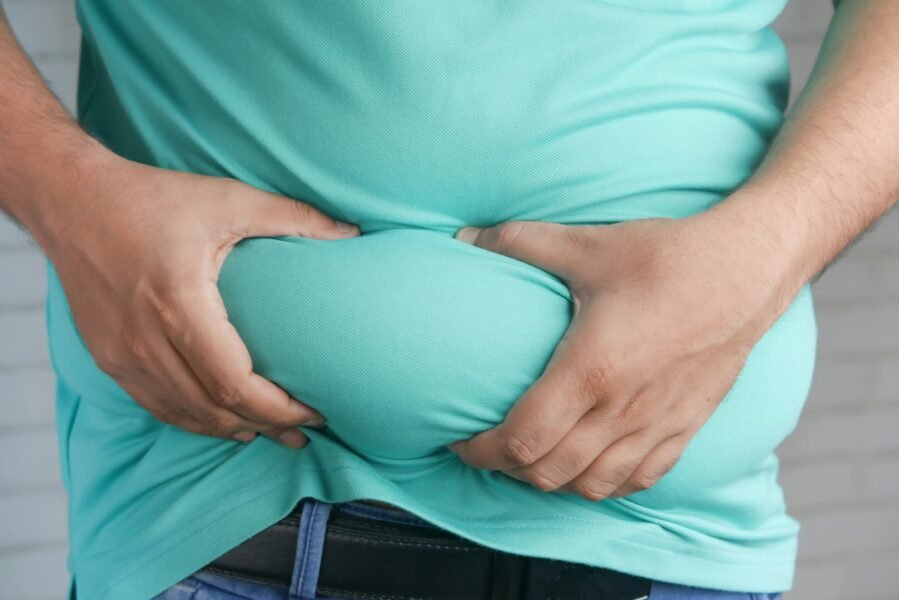
Why Belly Fat Is Not Reducing Even After Diet & Walking
Author: Tabish Gulzar, MSc Nutrition & Dietetics
Experience: 3+ years in community nutrition education and lifestyle health writing
If you’ve been eating “better,” walking regularly, and still notice that your belly fat is not reducing, you’re not alone. In real-world settings, this is one of the most common frustrations people express when they’re trying to improve their health. It can feel confusing and discouraging—especially when effort doesn’t seem to match results.
Before assuming you’re doing something wrong, it’s important to understand this early and clearly: belly fat often responds differently than other areas of the body, and progress is rarely linear. Many people experience genuine improvements in health long before visible changes appear in the stomach area.
Professional observation (nutrition practice): In routine lifestyle consultations, it is common for individuals to report improved stamina, appetite control, or daily energy within weeks—while abdominal fat measurements remain unchanged for longer.
This article is designed to explain why this happens, normalize the experience, and gently guide you toward more realistic expectations—without pressure, fear, or extreme advice.
Why belly fat behaves differently
Belly fat is not just stored energy—it’s biologically active tissue. Health organizations such as the World Health Organization (WHO) and National Institutes of Health (NIH) explain that abdominal fat, especially deeper “visceral fat,” is influenced by hormones, stress responses, sleep patterns, and age-related metabolic changes.
In practice, this means:
-
Your body may reduce fat in the face, arms, or legs first
-
The stomach area is often “last to respond”
-
Visible belly fat loss may lag behind internal health improvements
Commonly observed among beginners is the assumption that walking and diet changes should target the belly directly. Unfortunately, spot fat reduction is not how the body works, regardless of effort or intention.
Professional observation (clinical patterns): Among adults following general weight-management advice, abdominal fat is frequently one of the final areas to show visible change, even when overall body weight is decreasing.
Common mistakes people don’t realize
Many people doing “everything right” are still unknowingly working against their own physiology.
Eating less, but not eating enough
Severely restricting food can raise stress hormones like cortisol. According to guidance from the Endocrine Society, elevated cortisol is associated with increased abdominal fat storage in some individuals.
Inconsistent routines
In real-world settings, weekday discipline followed by weekend overeating can stall visible fat loss—even if weekly effort feels high.
Ignoring recovery factors
Sleep deprivation, chronic stress, and mental fatigue are frequently observed barriers. The Centers for Disease Control and Prevention (CDC) notes that poor sleep is linked with changes in appetite regulation and fat distribution.
These patterns are common, human, and often unintentional.
Walking & diet myths
Walking and diet are valuable—but they are often misunderstood.
Myth: Walking alone burns stubborn belly fat
Walking improves cardiovascular health and supports overall fat loss. However, walking alone does not guarantee belly fat reduction, especially if the body has adapted to the same routine over time.
Myth: Healthy food automatically equals fat loss
Even nutritious foods can exceed energy needs if portions don’t align with activity levels. Conversely, under-eating can also slow progress by triggering metabolic adaptation.
Myth: Daily effort should show daily results
Body fat changes are gradual. Short-term weight or measurement stability does not mean failure—it often reflects normal biological fluctuation.
Public health guidelines consistently emphasize long-term consistency over rapid visible change.
When effort ≠ results
This is often the most emotionally difficult part.
In practice, many people:
-
Feel stronger or more energetic
-
Walk farther with less fatigue
-
Notice better digestion or mood
Yet still say, “My belly fat is not going away.”
This disconnect happens because internal improvements usually come before visible fat loss. Health markers often shift quietly long before the mirror reflects them.
Professional observation (population trends): It is commonly observed that waist circumference changes lag behind fitness or weight improvements by several weeks, particularly in adults over 30.
A realistic timing note
For many beginners, noticeable belly fat changes may take roughly 8–16 weeks of consistent habits. This range varies widely based on genetics, sleep, stress load, age, and baseline health, and it is not a guarantee—only a commonly observed timeframe.
Plateaus are not signs to quit—they are commonly observed phases of adaptation. Most sustainable progress happens after these periods, not before.
What to focus on next (no products)
Rather than doing more, it’s often more effective to do slightly differently.
Prioritize routine over intensity
Small, repeatable habits—consistent meals, regular movement, predictable sleep—tend to outperform bursts of extreme effort.
Add gentle strength-based movement
Public health bodies including the WHO recommend muscle-strengthening activities at least twice weekly. This supports metabolic health and body composition over time.
Manage stress realistically
This doesn’t mean eliminating stress, which is rarely possible. It means recognizing that unmanaged stress can directly influence belly fat storage.
Track progress beyond the mirror
Energy levels, waist comfort, stamina, and consistency are valid indicators of success—especially early on.
All of these approaches are flexible and optional. What matters is sustainability, not perfection.
How progress often unfolds (general pattern)
| Time period | Commonly noticed changes |
|---|---|
| Weeks 1–4 | Improved energy, appetite awareness, and walking endurance |
| Weeks 5–8 | Stabilized weight, better routine adherence |
| Weeks 9–16 | Gradual waist or belly-area changes for some individuals |
This sequence reflects observed patterns, not promises. Individual experiences vary.
A brief data-based clarification
Population health data referenced by organizations like the CDC indicate that waist circumference reductions often occur later than overall weight changes, and short-term fluctuations of 1–3 cm can occur due to hydration, digestion, and hormonal cycles rather than fat change alone.
A calm perspective in the future
If your belly fat is not reducing despite diet and walking, it does not mean your efforts are wasted or that your body is “resistant.” It usually means your body is responding on its own timeline, shaped by factors beyond willpower alone.
Progress is personal, often slow, and rarely visible all at once. With consistent, balanced habits, change tends to accumulate quietly—and then becomes noticeable later than expected.
You are not behind. You are learning how your body actually works.
Frequently Asked Questions (FAQ): Belly Fat Not Reducing
Why is my belly fat not reducing even after diet and walking?
In most cases, belly fat is not reducing because abdominal fat responds more slowly than fat in other areas. Hormonal factors, stress levels, sleep quality, age, and metabolic adaptation all influence how the body stores and releases belly fat. Walking and diet improve health, but visible belly fat loss often takes longer and does not follow a predictable timeline.
Is it normal that belly fat is not going away but my weight is stable?
Yes. In real-world settings, it is common for belly fat to appear unchanged even when weight is stable or other health improvements are occurring. The body may be redistributing fat, increasing muscle tone, or reducing internal visceral fat before external changes become visible.
Can walking alone reduce stubborn belly fat?
Walking supports overall fat loss and metabolic health, but walking alone is usually not enough to reduce stubborn belly fat. Public health guidance suggests combining regular walking with strength-based movement, adequate recovery, and consistent nutrition for more sustainable body composition changes.
Why does belly fat stay even when I eat healthy food?
Eating healthy does not always mean eating in a way that supports fat loss. Portion size, meal timing, stress-related hormones, and sleep patterns all affect how the body stores fat. Belly fat may stay if energy intake and recovery do not align with individual needs.
Does stress really cause belly fat to stay?
Yes, stress can contribute to belly fat staying in place for some people. Health authorities such as the Endocrine Society explain that elevated cortisol levels are associated with increased abdominal fat storage, particularly when stress is chronic and recovery is limited.
How long does it usually take for belly fat to reduce?
There is no fixed timeline. Commonly observed patterns show that belly fat reduction may take several months of consistent habits. Visible changes often appear later than improvements in energy, stamina, or metabolic health.
Why is lower belly fat harder to lose?
Lower belly fat is often more resistant due to genetics, hormonal sensitivity, and reduced blood flow compared to other areas. This makes lower belly fat one of the last places where visible fat loss occurs, even when overall progress is happening.
Am I doing something wrong if my stomach fat loss is slow?
Not necessarily. Slow stomach fat loss is common and does not automatically indicate a problem. In practice, consistency, stress management, and routine stability matter more than increasing intensity or cutting more calories.
Can belly fat be reduced without intense workouts or gym training?
Yes. Belly fat can be reduced gradually through consistent daily movement, strength-based activities at home, balanced nutrition, and adequate sleep. Extreme workouts are not required and are often difficult to sustain long term.
Do home remedies actually help reduce belly fat?
There is limited evidence that home remedies directly reduce belly fat. Some habits, such as regular meals, hydration, and stress reduction, may indirectly support fat loss, but no home remedy can target belly fat specifically.
What should I focus on if belly fat is not reducing?
When belly fat is not reducing, focus on consistency rather than intensity. Prioritize regular movement, strength maintenance, sleep quality, stress awareness, and realistic expectations. These factors support long-term fat reduction more reliably than quick fixes.
Is stubborn belly fat a health problem or just cosmetic?
Not all belly fat is a health problem. Visible belly fat can be cosmetic, while deeper visceral fat is more closely linked to health risks. According to public health guidance, improving lifestyle habits benefits health even before visible belly fat changes occur.
Why does belly fat not reduce first?
Belly fat does not reduce first because the body follows its own fat-loss order, influenced by genetics and hormones. For many people, the stomach area is biologically designed to hold onto fat longer than other regions.
Should I stop dieting if my belly fat is not reducing?
Rather than stopping entirely, it may be helpful to reassess the approach. Extremely restrictive dieting can increase stress and slow visible fat loss. Sustainable, balanced eating patterns are generally more effective over time.
Can belly fat be reduced at home without supplements or products?
Yes. Belly fat can be reduced at home through consistent habits such as daily walking, basic strength exercises, regular sleep, and stress management. No supplements or products are required for long-term progress.