
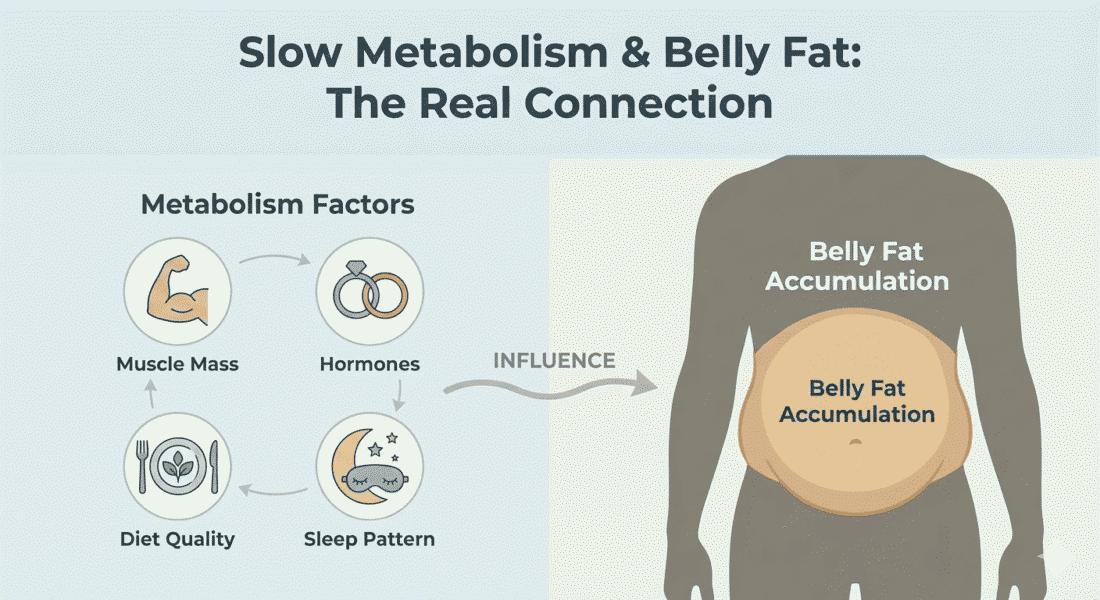
Slow Metabolism & Belly Fat: The Real Connection
Article Credit: Dr. Ayesha Khan, MSc in Nutrition & Metabolic Health, 12+ years of experience
Reviewed by: Dr. Omar Siddiqui, MD, Public Health Specialist
Understanding the Frustration
If you’ve been noticing stubborn belly fat despite following diets or exercise routines, you’re not alone. Many people feel confused and frustrated when weight doesn’t shift as expected. It’s easy to blame “bad luck” or overly strict routines, but sometimes, underlying metabolic factors play a bigger role than lifestyle alone. This article unpacks the connection between slow metabolism and belly fat, providing practical guidance grounded in real-world patterns and professional consensus.
What Slow Metabolism Means
Metabolism refers to the processes your body uses to convert food into energy. A “slow metabolism” simply means your body burns fewer calories at rest than average, which can make weight management more challenging.
In practice, metabolic rate is influenced by several factors:
-
Age: Muscle mass naturally declines over time, slowing metabolism.
-
Hormones: Thyroid hormones, insulin, and cortisol affect energy use.
-
Body composition: Muscle burns more calories than fat, even at rest.
-
Lifestyle factors: Sleep, stress, and physical activity levels all contribute.
Key insight: Slow metabolism is rarely a single cause; it’s usually the result of multiple factors interacting over time.
Why It Targets Belly Fat
Real-world observations show that metabolic slowdown often coincides with fat accumulation around the midsection. This is partly due to:
-
Hormonal distribution: Elevated cortisol from stress encourages visceral fat storage.
-
Insulin sensitivity: Lower insulin efficiency can prioritize belly fat storage.
-
Energy conservation: When metabolism slows, the body may retain energy in fat deposits.
It’s important to note that genetics, age, and lifestyle together shape where fat accumulates. Not everyone with a slower metabolism will develop belly fat, but patterns suggest the midsection is commonly affected.
Signs Your Metabolism May Be Slow
While lab tests provide the most accurate measurement, certain signs can indicate a slower metabolic rate, especially if your belly fat is not reducing:
-
Difficulty losing weight despite calorie control and exercise.
-
Feeling fatigued even after adequate sleep.
-
Cold hands and feet or low body temperature.
-
Digestive sluggishness or irregular bowel movements.
-
Muscle loss alongside fat gain.
In real-world settings, these signs often appear gradually, making it easy to dismiss them as normal aging or lifestyle issues. Awareness is the first step toward adjustment.
Ways to Boost Metabolism
No single fix will “reset” your metabolism overnight, but practical, consistent approaches can support energy use and fat management:
1. Build Lean Muscle
Strength training increases resting metabolic rate because muscle tissue requires more energy to maintain. Even modest improvements in muscle mass can impact calorie burn over time.
2. Prioritize Protein Intake
In practice, protein has a higher thermic effect than fats or carbs, meaning digestion itself burns more calories. Balanced meals with sufficient protein also support muscle maintenance.
3. Move Throughout the Day
Small, repeatable activities—walking after meals, short movement breaks, or gentle resistance exercises—help offset a sedentary lifestyle without requiring intense workouts.
4. Optimize Sleep & Stress
Quality sleep and stress management influence hormones like cortisol and thyroid hormones. Consistent routines, relaxation techniques, and moderate exposure to daylight can support metabolic function.
5. Hydration & Nutrient Balance
Adequate water intake is essential for all metabolic processes. Micronutrients like magnesium, zinc, and B vitamins also support energy metabolism.
Optional tips observed in practice: Green tea, cold exposure, and intermittent low-intensity activity can modestly enhance metabolic activity, but effects vary widely and should be seen as supportive rather than mandatory.
Key Takeaways
-
Slow metabolism is multifactorial, influenced by age, hormones, muscle mass, and lifestyle.
-
Belly fat often accumulates due to hormonal patterns and energy conservation tendencies.
-
Signs of slower metabolism can include fatigue, cold extremities, and difficulty losing weight.
-
Sustainable, consistent changes—strength training, protein intake, movement, sleep, and hydration—are more effective than extreme diets or quick fixes.
-
Progress is gradual and non-linear; patience and repetition matter more than intensity.
Disclaimer: This content is for educational purposes and reflects general patterns observed in real-world settings and public health guidance. Individual results may vary. For personalized medical advice, consult a qualified healthcare professional.
FAQ:
Q1: What causes slow metabolism and belly fat?
Slow metabolism can be caused by age-related muscle loss, hormonal imbalances, low physical activity, and lifestyle factors. This can lead to fat accumulation, especially around the belly.
Q2: How can I tell if my metabolism is slow?
Common signs include persistent fatigue, difficulty losing weight despite dieting, cold hands or feet, and loss of muscle mass. Lab tests can confirm metabolic rate.
Q3: Does slow metabolism make belly fat harder to lose?
Yes, slower metabolism can reduce calorie burn, making fat around the belly more resistant to diet and exercise.
Q4: Can strength training boost a slow metabolism?
In real-world settings, building lean muscle through strength training can increase resting metabolic rate and support gradual fat loss.
Q5: Are there dietary ways to support metabolism?
Protein-rich meals, adequate hydration, and balanced nutrients like B vitamins, magnesium, and zinc can support metabolic processes and energy use.
Q6: Can stress or poor sleep affect metabolism?
Yes. Elevated cortisol and disrupted sleep can slow metabolism and encourage belly fat storage. Managing stress and prioritizing quality sleep are beneficial.
Q7: Is it possible to fully “reset” a slow metabolism?
Metabolism can be improved through lifestyle adjustments, but there is no instant reset. Long-term consistency is key.
Q8: Can a slow metabolism cause belly fat specifically?
Yes. Hormonal and energy regulation factors often lead to fat accumulation in the midsection, though genetics and lifestyle also play a role.
Q9: How can I know if my metabolism is slow?
Signs include fatigue, difficulty losing weight despite calorie control, cold hands/feet, and muscle loss. Lab tests provide definitive answers.
Q10: Will exercise reset a slow metabolism?
Exercise, especially strength training, can increase muscle mass and boost metabolic rate, but there is no overnight reset. Consistency is key.
Q11: Are there foods that speed up metabolism?
Protein-rich meals, sufficient hydration, and nutrient-balanced diets support metabolism. Effects of individual foods or supplements are generally modest.
Q12: Is slow metabolism permanent?
Metabolism naturally slows with age, but lifestyle strategies can optimize energy use and reduce fat accumulation over time.