
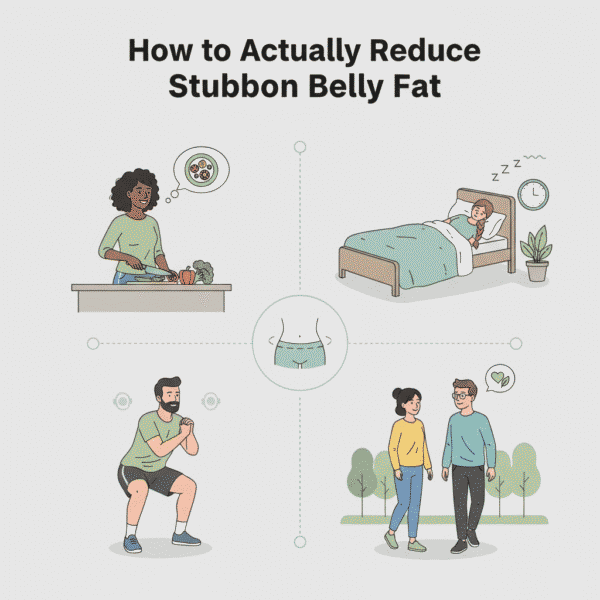
How to Actually Reduce Stubborn Belly Fat (What Works in Real Life)
Author: Hassan Shroff, MSc Nutrition & Public Health, 10+ years in health coaching and lifestyle guidance
Reviewed by: Dr. Ayesha Malik, MD, Public Health & Preventive Medicine
Introduction: Why Belly Fat Feels Impossible to Lose
If you’ve been trying to lose belly fat, you’re not alone. Many people follow strict diets, try countless workouts, and still see minimal change around the midsection. It can feel frustrating—and often discouraging—especially when the results promised by quick-fix solutions never materialize (learn how to distinguish belly fat from bloating).
In practice, stubborn belly fat is influenced by a mix of factors, including hormones, metabolism, lifestyle, and even genetics. Understanding what truly works versus what is hype is the first step toward achievable, sustainable progress.
What Doesn’t Work
Before focusing on effective strategies, it’s important to clear up common myths:
-
Spot reduction exercises: Crunches, sit-ups, or ab-specific workouts won’t selectively burn belly fat. Fat loss occurs systemically.
-
Extreme caloric restriction: Severely cutting calories may reduce weight temporarily but often slows metabolism and increases fat retention long-term.
-
“Fat-burning” supplements: Many over-the-counter products promise belly fat loss but lack robust evidence. Only a few ingredients (like caffeine) show modest effects, and even these are small in real-world settings.
-
Quick fixes or detoxes: Juice cleanses, detox teas, or fad diets rarely produce lasting changes and can disrupt normal eating patterns.
In real-world settings, these approaches often lead to frustration rather than results.
What Actually Works
The key to reducing belly fat lies in sustainable habits, not shortcuts. Commonly observed effective strategies include:
-
Balanced Nutrition
-
Emphasize whole foods: vegetables, fruits, lean proteins, legumes, and whole grains.
-
Moderate refined carbs and added sugars, which are linked to visceral fat accumulation.
-
Include healthy fats (nuts, seeds, olive oil) to support satiety and hormone balance.
-
-
Consistent Physical Activity
-
Both resistance training and cardio contribute to fat reduction. Strength training preserves muscle, which helps maintain metabolism during weight loss.
-
Even daily brisk walking or stair climbing can produce meaningful reductions over time.
-
-
Sleep and Stress Management
-
Chronic stress elevates cortisol, which is associated with abdominal fat accumulation.
-
Aim for 7–9 hours of quality sleep; poor sleep is linked to increased appetite and insulin resistance.
-
-
Routine and Consistency
-
Small, repeatable habits—like regular meal timing, walking after meals, or keeping a food diary—often outperform dramatic but short-lived changes.
-
Role of Metabolism
Metabolism affects how your body processes energy. In practice:
-
Muscle mass is a major driver of resting metabolic rate. More lean mass helps burn more calories even at rest.
-
Aging, hormonal changes, and some medications can slow metabolism, making fat loss slower but not impossible.
-
Focus on building strength gradually and maintaining activity, rather than chasing high-intensity burn alone.
Tip: Sustainable fat loss often occurs at 0.5–1 lb per week, reflecting realistic metabolic constraints.
Role of Appetite Control
In real-world settings, appetite regulation is often more critical than exercise intensity:
-
Protein-rich meals: Help reduce hunger and support lean muscle maintenance.
-
Fiber intake: Vegetables, fruits, and whole grains increase fullness and stabilize blood sugar.
-
Mindful eating: Eating slowly, minimizing distractions, and recognizing satiety cues can prevent overeating.
-
Structured routines: Regular meals and snacks prevent energy dips that trigger cravings.
Appetite control strategies align with long-term adherence, which is a stronger predictor of belly fat reduction than short-term calorie cuts.
When Extra Support is Needed
Sometimes, despite consistent lifestyle habits, belly fat remains challenging due to genetics, hormonal imbalances, or underlying medical conditions (like insulin resistance or hypothyroidism). In such cases:
-
Medical evaluation can rule out endocrine or metabolic contributors.
-
Professional guidance from registered dietitians, certified trainers, or clinicians ensures personalized strategies.
-
Optional support tools, such as structured programs or habit trackers, can reinforce consistency—but these are supplemental, not mandatory.
Conclusion: Sustainable Belly Fat Reduction
In practice, reducing stubborn belly fat is rarely rapid. Progress is gradual, influenced by metabolism, lifestyle, and consistent behaviors. Focusing on small, repeatable actions—balanced nutrition, strength training, sleep, stress management, and mindful eating—builds long-term results without extreme measures.
Remember: success is personal and non-linear. Small wins accumulate, and maintaining flexibility while tracking patterns often leads to the most meaningful change.
FAQ Section
Q: Can I target belly fat specifically with exercise?
A: No. Fat loss is systemic; spot exercises like crunches do not selectively burn belly fat. Overall, activity and strength training are more effective.
Q: How much protein should I eat to reduce belly fat?
A: In practice, 1.2–1.6 grams per kilogram of body weight per day supports satiety and muscle maintenance, but individual needs vary.
Q: Does sleep really affect belly fat?
A: Yes. Poor sleep is linked to higher cortisol, insulin resistance, and increased appetite, which can contribute to abdominal fat accumulation.
Q: Are fat-burning supplements effective?
A: Most supplements show minimal real-world impact. Only a few (like caffeine) have modest evidence, but lifestyle habits are far more important.
Q: How quickly can I expect to lose belly fat?
A: Realistically, 0.5–1 lb per week is achievable. Consistency over months produces noticeable changes, whereas rapid losses are usually unsustainable.
Q: How can I reduce stubborn belly fat naturally?
A: In real-world settings, consistent habits such as balanced nutrition, regular strength training, aerobic exercise, sufficient sleep, and stress management are most effective. There’s no single quick fix, but sustainable changes gradually reduce belly fat over time.
Q: What exercises help reduce belly fat fastest?
A: Spot-reduction exercises don’t work, but combining resistance training with cardio is effective for overall fat loss, including the abdominal area. Walking, cycling, and strength workouts help preserve muscle while promoting fat reduction.
Q: Which foods are best for losing belly fat?
A: Fiber-rich vegetables, fruits, whole grains, lean proteins, and healthy fats help control appetite and support metabolism. Limiting added sugars and refined carbs can also reduce abdominal fat over time.
Q: How does metabolism affect belly fat loss?
A: Metabolism determines how efficiently your body burns calories. Muscle mass, age, hormones, and activity level influence metabolic rate. Maintaining strength training and activity helps counter natural metabolic slowing.
Q: Can poor sleep cause belly fat?
A: Yes. Chronic sleep deprivation can increase cortisol, disrupt appetite regulation, and promote abdominal fat accumulation. Targeting 7–9 hours of quality sleep per night supports belly fat reduction.
Q: Do fat-burning supplements really work?
A: Most over-the-counter products show minimal impact. Only certain ingredients, like caffeine, have modest evidence. Lifestyle habits remain the most reliable method for reducing belly fat.
Q: How long does it take to lose stubborn belly fat?
A: Realistically, 0.5–1 lb per week is achievable. Progress is non-linear, and small, consistent lifestyle changes yield the most sustainable results.
Q: When should I seek professional help for belly fat loss?
A: If belly fat persists despite consistent habits, or if you have medical conditions affecting metabolism or hormones, consult a registered dietitian or healthcare provider for personalized guidance.