
Why Belly Fat Is Harder to Lose Than Body Weight
Author: Tabish Gulzar, Health & Nutrition Content Strategist, 10+ years of experience
Reviewed by: Dr. Sara Malik, MD, Endocrinology & Metabolic Health
Losing weight often feels like a straightforward journey—eat less, move more, and the scale should reflect your efforts. Yet, many people notice that even after weeks or months of dieting and exercise, their belly stubbornly refuses to shrink. You might feel frustrated, wondering why your overall body weight decreases but the midsection remains. This experience is common and has both biological and lifestyle explanations. Understanding them can reduce frustration and help you approach fat loss with realistic expectations.
Types of Belly Fat
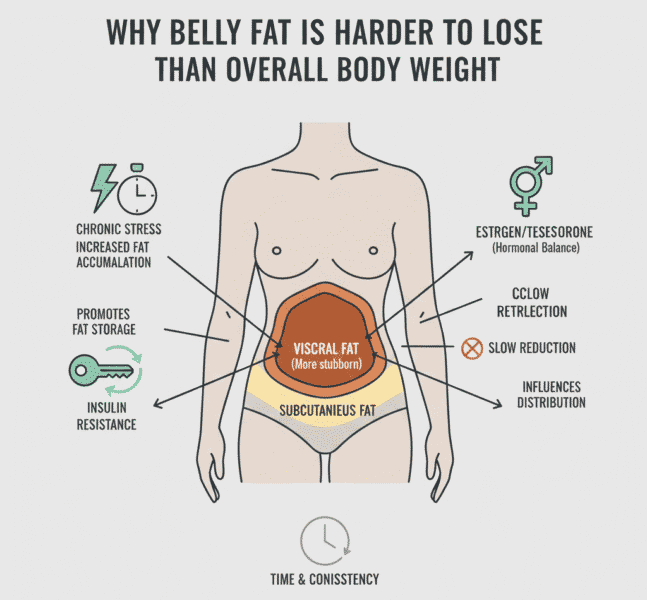
Not all belly fat is the same, and where it resides influences how easily it responds to diet and exercise.
-
Subcutaneous Fat – The soft fat directly under the skin. This is the fat you can pinch and is more common in both men and women. In practice, this fat responds moderately well to calorie reduction and exercise, though it may linger in the lower belly region.
-
Visceral Fat – Located deeper, surrounding organs like the liver, pancreas, and intestines. This type of fat is more metabolically active, meaning it releases inflammatory signals and interacts with hormones like insulin and cortisol. Real-world observations show visceral fat is more stubborn to lose because it’s tightly linked with hormonal regulation and stress responses.
Takeaway: Visceral fat is generally “last to go” compared with subcutaneous fat, explaining why belly fat reduction is often slower than overall weight loss.
Hormones Involved
Several hormones influence belly fat storage and loss. Understanding their role can clarify why your midsection is resistant:
-
Insulin: Regulates blood sugar and fat storage. Insulin resistance, commonly seen in adults with higher visceral fat, promotes fat retention around the abdomen. In practice, managing blood sugar with balanced meals and regular activity supports belly fat reduction.
-
Cortisol: Often called the stress hormone. Elevated cortisol from chronic stress encourages fat storage around the abdomen. Even when diet and exercise are adequate, high cortisol levels can maintain belly fat.
-
Sex Hormones (Estrogen & Testosterone): Imbalances can redistribute fat toward the belly. For example, lower estrogen after menopause in women or declining testosterone in men often coincides with increased abdominal fat.
Real-World Tip: Hormone-related belly fat loss is gradual and requires consistent, lifestyle-based interventions rather than rapid solutions.
Stress & Fat Storage
Stress is not just mental—it has tangible effects on fat distribution. Chronic stress elevates cortisol, which can:
-
Increase appetite, particularly for calorie-dense foods
-
Encourage visceral fat storage
-
Reduce fat mobilization during exercise
Commonly observed among adults, high stress combined with irregular sleep patterns can make belly fat reduction particularly slow. Simple lifestyle adjustments—consistent sleep schedules, stress management techniques, and mindfulness practices—can support fat reduction over time.
Why Belly Fat Is Last to Go
Even with overall weight loss, the abdomen often retains fat longer due to:
-
Fat Cell Differences: Belly fat cells, particularly visceral fat, are more hormonally sensitive and resistant to breakdown compared to fat in limbs or hips.
-
Blood Flow Patterns: Fat mobilization is influenced by blood flow; areas like the belly have relatively lower circulation, slowing fat removal.
-
Genetics: Your body’s natural fat distribution patterns determine where fat is stored first and lost last.
-
Lifestyle Factors: Diet quality, activity type, stress, and sleep all influence belly fat retention.
In practice: Even experienced dieters notice that belly fat often decreases slowly, while overall body weight responds faster. Patience, consistency, and lifestyle adjustments yield more sustainable results than aggressive, short-term strategies.
Practical Steps for Gradual Belly Fat Reduction
-
Focus on consistent, moderate activity: Daily movement, including strength training, supports overall fat loss.
-
Balanced nutrition: Prioritize protein, fiber, and minimally processed foods to support insulin regulation.
-
Stress management: Meditation, yoga, or simple breathing exercises can help normalize cortisol.
-
Sleep hygiene: Aim for 7–9 hours of quality sleep; irregular sleep is linked to abdominal fat retention.
-
Realistic goal-setting: Expect belly fat loss to lag behind total weight loss; track progress with waist measurements rather than only scale weight.
FAQ: Why Belly Fat Is Harder to Lose
Q1: Why is belly fat harder to lose than body weight?
A: Belly fat, especially visceral fat, is hormonally and metabolically more resistant than fat in other areas. Factors like insulin resistance, cortisol levels, blood flow patterns, and genetics make the abdomen the last place fat is lost.
Q2: What types of belly fat are most stubborn?
A: Visceral fat, which surrounds internal organs, is the most difficult to lose. Subcutaneous fat under the skin responds moderately to diet and exercise, but visceral fat is highly influenced by hormones and stress.
Q3: How do hormones affect belly fat loss?
A: Hormones such as insulin, cortisol, estrogen, and testosterone regulate fat storage. Insulin resistance and elevated cortisol can maintain belly fat even during calorie restriction or exercise.
Q4: Does stress make belly fat harder to lose?
A: Yes. Chronic stress increases cortisol, which encourages fat storage around the abdomen, increases appetite, and slows fat breakdown. Managing stress is key for gradual belly fat reduction.
Q5: Can diet alone reduce belly fat effectively?
A: Diet alone supports overall fat loss but is usually insufficient for significant belly fat reduction. Combining balanced nutrition with exercise, stress management, and good sleep improves results.
Q6: Why does belly fat sometimes persist after overall weight loss?
A: Belly fat is often last to go due to fat cell differences, lower blood flow, hormonal sensitivity, and genetic predisposition. Even when total body weight decreases, the midsection may remain resistant.
Q7: How long does it typically take to lose belly fat?
A: In real-world settings, belly fat loss is gradual and slower than overall weight loss. Sustainable changes over weeks to months are normal; patience and consistency are crucial.
Q8: What practical steps help reduce belly fat over time?
A: Moderate daily activity, strength training, balanced meals, stress management, quality sleep, and realistic goal-setting help support gradual belly fat reduction.
Key Takeaway: Belly fat is inherently more resistant due to hormone interactions, fat cell differences, and stress-related factors. Sustainable, lifestyle-focused strategies—rather than quick fixes—offer the most reliable pathway to a leaner midsection. Progress may be slow, but consistent effort, patience, and realistic expectations allow for long-term improvement.