Written by:Ramzi Issa Credentials: Health & Wellness Content Specialist, YMYL Editorial Strategist Experience: 3+ years creating evidence-based health education content for general audiences
Reviewed by: Tabish Gulzar
Introduction: Why This Feels So Confusing (and Frustrating)
If your stomach looks flat some days and suddenly swollen on others, you’re not imagining things—and you’re not alone. Many people feel confused, discouraged, or even defeated when their belly changes shape despite eating “right” or trying to be active.
In real-world settings, this confusion often leads people to blame themselves unnecessarily or chase solutions that don’t match the actual problem. Belly fat and bloating can look similar, feel uncomfortable, and affect confidence—but they are not the same thing, and they respond to very different approaches.
This guide is designed to calmly help you tell the difference, without judgment or extreme advice. The goal is clarity, not pressure—so you can focus your energy on what actually helps.
What Is the Difference Between Belly Fat and Bloating?
At a practical level:
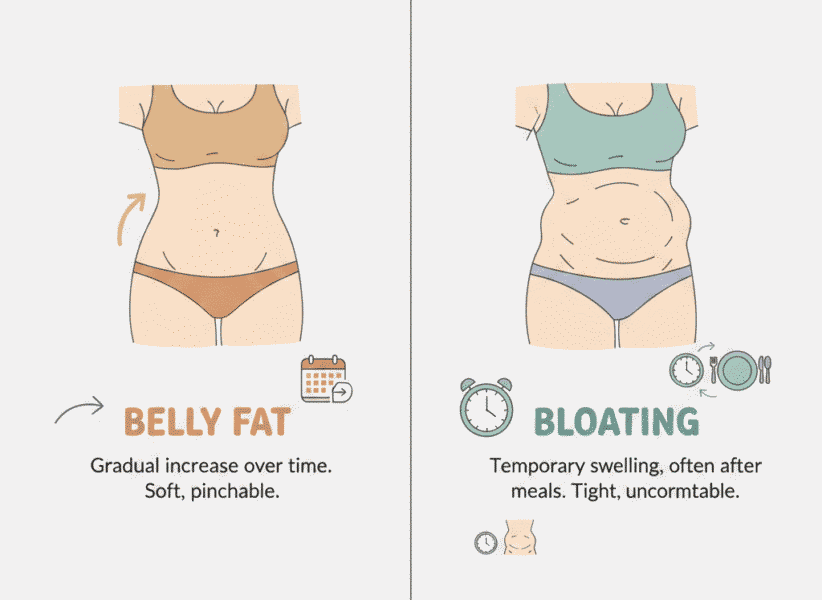
Belly fat is stored body fat that accumulates gradually over time.
Bloating is temporary abdominal swelling, often caused by digestion, gas, fluid shifts, or food sensitivities.
Public health organizations such as the National Institute of Diabetes and Digestive and Kidney Diseases (NIDDK) and professional gastroenterology bodies recognize bloating as a functional digestive symptom, not a fat-storage issue.
Understanding which one you’re dealing with is the first step toward realistic expectations and sustainable progress.
Signs of Bloating (Bloated Stomach vs Fat)
Bloating tends to have patterns that are noticeable once you know what to look for.
Common signs of bloating
Your stomach appears flat in the morning and expands as the day goes on
Swelling increases after meals, especially large or carb-heavy ones
The belly feels tight, stretched, or gassy, not soft
Discomfort improves after bowel movements or passing gas
Size changes within hours or days, not weeks
In practice, bloating is commonly observed among people with sensitive digestion, irregular meal timing, high sodium intake, or stress-related gut changes.
The American College of Gastroenterology notes that bloating is often linked to gut motility, food fermentation, or fluid retention—not excess fat.
Signs of Real Belly Fat
Belly fat behaves very differently from bloating.
Common signs of true fat accumulation
The belly size remains consistent throughout the day
Fat feels soft or pinchable, rather than tight
Changes happen slowly over months, not overnight
The area doesn’t significantly flatten after digestion
Weight or measurements trend upward over time
From a public health perspective, organizations like the World Health Organization (WHO) distinguish body fat accumulation as a metabolic and lifestyle-related process, influenced by long-term energy balance, sleep, stress, and genetics.
This confusion is extremely common, and there are understandable reasons for it.
1. Visual similarity
Both can cause visible belly swelling, especially when sitting or wearing fitted clothing.
2. Daily fluctuation
Water retention, digestion, and hormones can temporarily exaggerate the appearance of fat that’s already there.
3. Social media distortion
Online images often ignore normal abdominal changes throughout the day, creating unrealistic comparison points.
4. Overlapping triggers
Highly processed foods, stress, and poor sleep can worsen both bloating and fat storage, making the signals harder to separate.
In real-world observation, many people attempt fat-loss strategies when their primary issue is digestive bloating—leading to frustration when nothing changes.
A Simple “Fat or Bloating” Self-Check (Non-Diagnostic)
This is not a medical test, but it can help guide your focus:
Does your belly shrink noticeably overnight? → Likely bloating
Does it feel tight and uncomfortable rather than soft? → Likely bloating
Has the size changed little over several weeks? → More likely fat
Does it worsen after specific meals? → Often bloating-related
If symptoms are painful, persistent, or accompanied by other health changes, clinical guidelines recommend consulting a qualified healthcare professional.
What Should You Focus on Fixing First?
If bloating seems more likely
Public digestive health guidance emphasizes gentle, consistency-based steps:
Eating more slowly and regularly
Reducing excessive sodium and carbonated drinks
Noticing personal trigger foods without extreme elimination
Managing stress and sleep routines
These approaches are commonly recommended by gastroenterology associations because they support gut function without aggressive restriction.
If belly fat seems more likely
Consensus from organizations like the Centers for Disease Control and Prevention (CDC) emphasizes:
Sustainable eating patterns, not short-term dieting
Regular, moderate physical activity
Adequate sleep and stress regulation
Long-term habit consistency
In practice, visible fat loss is often gradual and non-linear, with plateaus being a normal part of the process.
Can Someone Have Both Belly Fat and Bloating?
Yes—very commonly.
Many people have a baseline level of abdominal fat that becomes more noticeable when bloating is layered on top. This combination can make progress feel invisible even when healthy habits are in place.
Recognizing this overlap can reduce self-blame and help set realistic timelines.
Important Perspective on Health and Appearance
It’s worth stating clearly: a changing belly does not automatically mean poor health. Medical organizations consistently caution against equating appearance alone with well-being.
Energy levels, digestion comfort, strength, mobility, and metabolic markers often matter more than day-to-day abdominal shape.
Final Thoughts: Clarity Over Pressure
Understanding the difference between belly fat and bloating isn’t about fixing your body—it’s about working with it. Progress, when it happens, is usually quiet, gradual, and deeply personal.
In long-term observation, people who focus on repeatable routines, realistic expectations, and self-trust tend to experience more sustainable outcomes than those chasing quick visual changes.
If your belly changes from day to day, that’s human. If progress feels slow, that’s normal. What matters most is choosing approaches that respect your body, your pace, and your life.
FAQ: Belly Fat vs Bloating
1. How can I tell if my belly is bloated or really fat?
Answer: Look for timing and texture. If your stomach swells after meals and feels tight but softens later, it’s likely bloating. If the size stays consistent over weeks and the belly feels soft or pinchable, it’s more likely real fat. Observing patterns over several days can help distinguish between the two.
2. Why does my belly look bigger in the evening than in the morning?
Answer: This is usually caused by bloating, which is temporary abdominal swelling due to digestion, gas, or fluid retention. Real fat does not fluctuate significantly in a single day.
3. Can bloating make me look like I have belly fat?
Answer: Yes. Temporary bloating can exaggerate abdominal size, making a belly fat deposit appear larger or more prominent. Identifying triggers like meals, sodium, or carbonation can help clarify what’s causing the swelling.
4. What foods cause belly bloating?
Answer: Common triggers include high-sodium foods, carbonated drinks, legumes, cruciferous vegetables (like broccoli and cabbage), and very high-fat or highly processed meals. Individual sensitivity varies, so tracking reactions over time is helpful.
5. How long does bloating usually last?
Answer: Bloating is often temporary, lasting a few hours to a day, especially after meals. Persistent bloating may require medical evaluation for digestive conditions like IBS, lactose intolerance, or food sensitivities.
6. Can belly fat be lost quickly if I reduce bloating?
Answer: No. Reducing bloating may make your stomach appear smaller, but real fat loss is gradual and occurs over weeks or months through sustainable habits like balanced eating, regular activity, and sleep optimization.
7. What is the best way to reduce belly bloating at home?
Answer: Gentle approaches are most effective: eat slowly, avoid excessive salt and carbonated drinks, stay hydrated, manage stress, and note individual food triggers. Overly restrictive diets are not recommended.
8. Why do some people confuse bloating with weight gain?
Answer: Both can cause abdominal swelling, but bloating fluctuates daily while fat accumulates slowly. Visual similarity, hormonal changes, and water retention often contribute to misinterpretation.
9. Can exercise reduce belly bloating?
Answer: Moderate activity like walking or yoga can help improve digestion and relieve gas, temporarily reducing bloating. However, exercise alone does not target belly fat directly.
10. Should I worry if my belly is bloated most of the time?
Answer: Persistent bloating may indicate an underlying digestive issue. Guidelines from gastroenterology associations suggest consulting a healthcare professional if bloating is frequent, painful, or accompanied by other symptoms like unexplained weight changes or digestive discomfort.